In October 2025, a U.S. data center operator partnered with a Dutch energy developer to plan a large-scale solar PV plant dedicated to supporting AI and high-performance computing needs.
This project is not an outlier. For facility managers, adopting solar PV solutions has become a strategic necessity for operational survival.
Critical Data Center Issues
For a data center, uptime is the primary metric of success, and any fluctuation in power quality can result in data corruption, hardware damage, or service unavailability. However, the public power grid may not keep up with the sector’s soaring demands.
1. Vulnerability to Power Outages As extreme weather events grow more frequent and aging grid infrastructure weakens, the risk of blackouts increases. For a data center, relying solely on the public grid is a gamble. While diesel generators have been the backup of choice, they are expensive to run, maintenance-heavy, and face increasing regulatory scrutiny due to emissions.
2. Risk of Throttling and Interruptions In many regions, utility companies are beginning to throttle power supply to heavy users during peak demand hours to prevent grid failure. For data centers that require a constant, flat line of power delivery, throttling is unacceptable. It forces operators to throttle their own computing loads, which degrades service quality for clients and results in lost revenue.
3. Rising and Volatile Energy Costs Electricity is often the single largest operational expense (OpEx) for a data center. With global energy markets facing volatility due to geopolitical tensions and supply constraints, the price per kilowatt-hour can spike unpredictably. This makes financial forecasting difficult and squeezes profit margins, especially for colocation providers operating on fixed contracts.
4. Intense Demands of AI and HPC
The rapid adoption of AI and High-Performance Computing (HPC) has created a new tier of energy requirements. AI model training requires continuous, uninterrupted power at high loads for extended periods. A momentary glitch that might be negligible for standard web servers can be catastrophic for AI training runs, potentially erasing weeks of progress. Solar PV Systems Are the Solution
To mitigate these risks, operators are integrating solar PV solutions directly into their infrastructure.
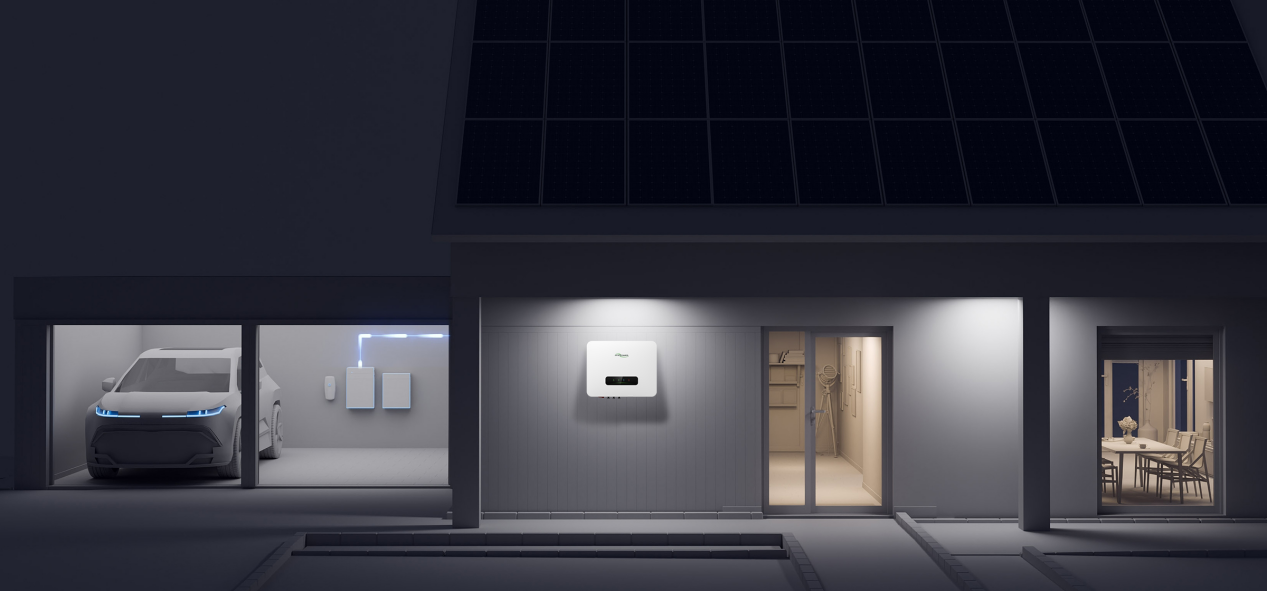
1. Independence from the Grid The most significant advantage of on-site solar is energy independence. With high-efficiency photovoltaic panels and robust energy storage systems (ESS), data centers can create a microgrid. This setup allows the facility to operate autonomously during grid failures.
2. Significant Cost Savings Solar power provides a hedge against inflation. Solar storage systems can discharge battery power during peak tariff hours, avoiding the highest utility rates. In some markets, data centers with excess battery capacity can participate in demand response programs, selling power back to the grid for profit. HYXI: A Reliable PV Solution Provider
A data center cannot afford a system failure; the hardware must be industrial-grade.
This is where HYXI excels. As a high-tech renewable energy company specializing in smart PV and Energy Storage Systems (ESS), HYXI provides the reliability that mission-critical facilities demand.
Robust Inverter Technology
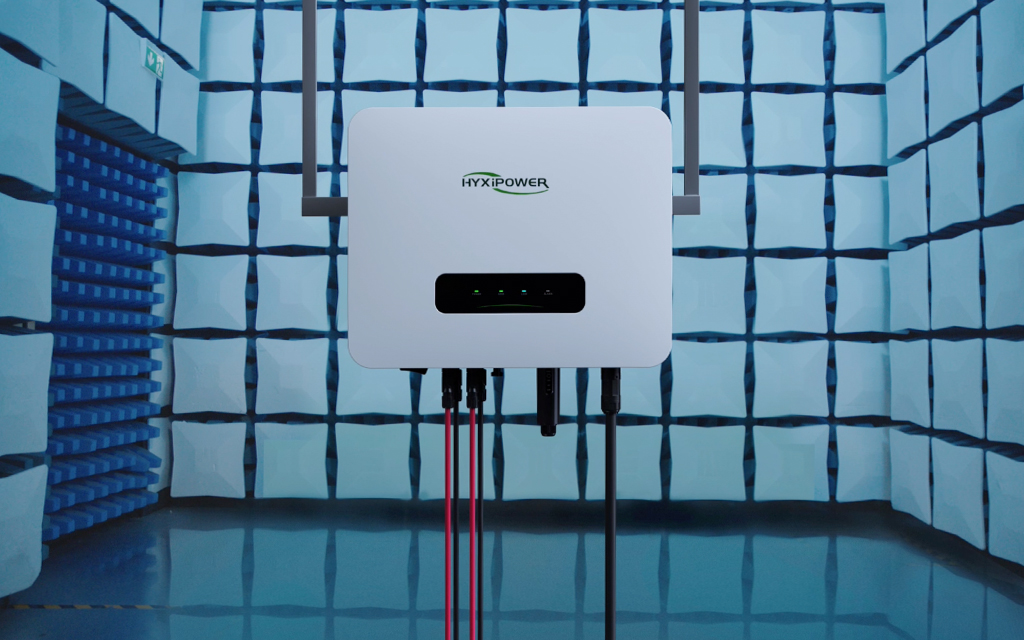
HYXI’s C&I string inverters are engineered for harsh environments and high performance. Some models feature IP65 protection ratings, making them suitable for varied installation sites.
Integrated Type II DC/AC surge protection guards against lightning and grid surges, a critical feature for protecting sensitive data center equipment downstream.
With maximum efficiencies up to 98.6%, some inverters ensure that the vast majority of generated solar energy is actually available for use.
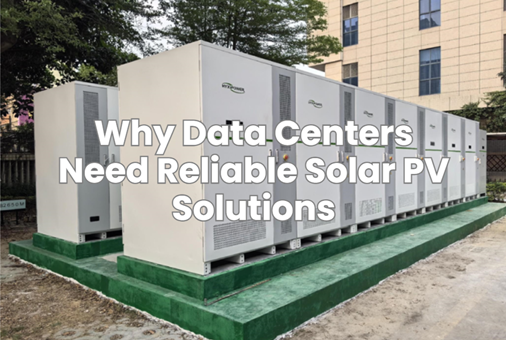
Secure Energy Storage
HYXI’s C&I Energy Storage Systems utilize LiFePO4 battery cells, which offer high thermal stability to prevent overheating. Some models support 6000+ charge/discharge cycles, providing over a decade of reliable daily service.
Additionally, the systems are built with IP65 protection and C4 salt spray resistance, ensuring durability even in challenging coastal environments where data centers are often situated for cooling efficiency. Conclusion
The risks of power outages, cost volatility, and capacity throttling are simply too high for data centers. With solar PV solutions, data center managers can secure their energy independence, stabilize their costs, and ensure 99.999% uptime.
HYXI offers the industrial-grade durability, safety, and efficiency required to power the future of digital infrastructure. Contact HYXI today to learn how our smart PV and ESS solutions can secure your data center power supply.